DIY 2-1-8 Lawn Recovery Fertilizer – 50 lb Bag

DIY 2-1-8 Lawn Recovery Fertilizer – 50 lb Bag

$35.99

Product Overview

THE PLAN

First check that the damage is no longer spreading and that the irrigation reaches the affected strip. Then feed the living lawn with DIY 2-1-8 and plant matching St. Augustine plugs in the bare patches. Feed with DIY 12-2-12 later, after the lawn is actively recovering.

HOW MUCH DIY 2-1-8

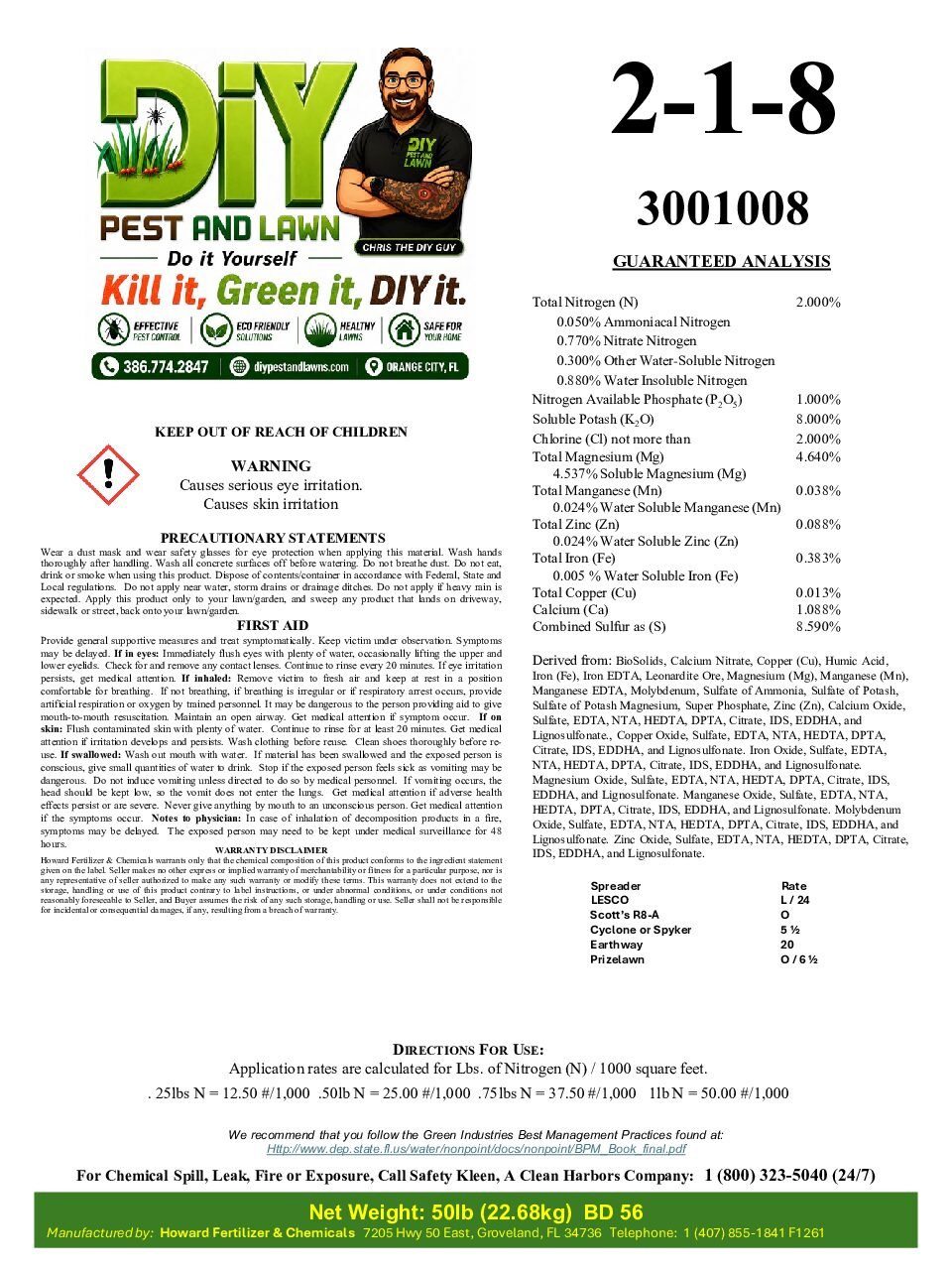
Apply 12.5 lb per 1,000 sq ft of measured lawn area. One 50 lb bag covers 4,000 sq ft at this rate. This is the label’s 0.25 lb nitrogen rate. Do not pile a full-area dose onto just the bare spots.

WHERE AND HOW TO APPLY

  1. Measure the St. Augustine lawn area to be treated. Check for living runners at the edges of the damaged spots and make sure sprinklers reach them.
  2. Spread DIY 2-1-8 evenly with a calibrated broadcast spreader. Apply half in one direction and the other half across it. Do not leave piles on the turf.
  3. Sweep granules off the sidewalk, curb, and street and back onto the lawn. Water the fertilizer in without runoff. Do not apply ahead of heavy rain.

PLUG THE BARE SPOTS

Remove loose dead grass from the openings. Install St. Augustine plugs matching the existing lawn; the photos do not establish its cultivar. Set each plug level with the soil, firm it in, and keep the root zone consistently moist while it establishes. Matching St. Augustine sod may be faster for larger openings.

CHECK AND NEXT FEEDING

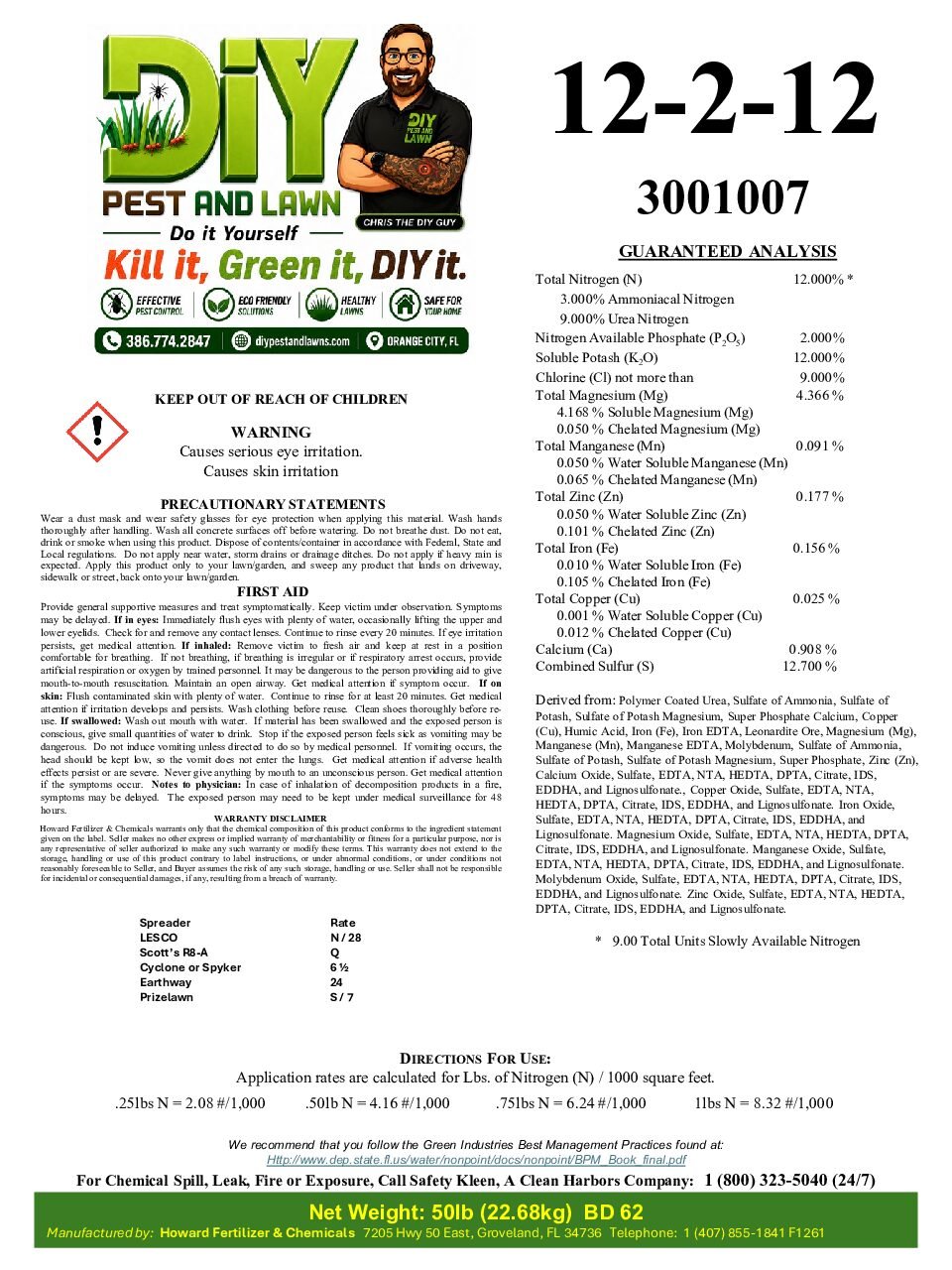
Check weekly for fresh green runners and plugs taking root. If brown areas continue to grow, find the cause before applying another product. Once the lawn is growing steadily, switch to DIY 12-2-12: its label lists 4.16 lb per 1,000 sq ft for the 0.5 lb nitrogen rate. Continue upkeep about every 6-8 weeks as needed; do not stack it immediately on top of 2-1-8.

CRITICAL RULES AND WHAT TO EXPECT

Keep children and pets off during application and until granules have been watered in and the grass is dry. Wear eye protection and avoid breathing dust. Mow St. Augustine high, avoid scalping, and keep irrigation even. Living turf may green up first; filling bare soil takes time and healthy runners or planted plugs.

WARRANTY AND CONDITIONS OF SALE

Apply according to the product label. DIY Pest & Lawn provides no warranty, express or implied, beyond the product label. The buyer/applicator assumes the risk of incorrect, uneven, excessive, or off-label application.

DIY Pest & Lawn | (386) 774-2847 | diypestandlawns.com

Kill it, Green it, DIY it. — Chris the DIY Guy

2-1-8 Fertilizer Lawn Recovery

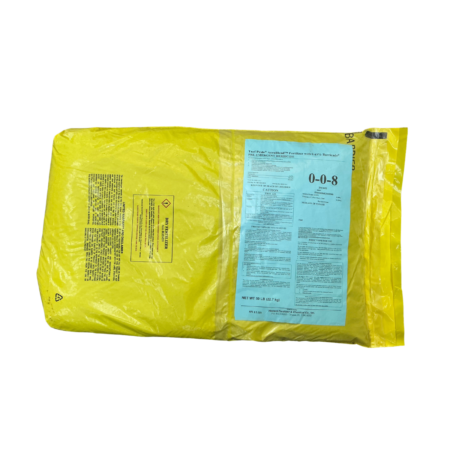
Low-nitrogen 2-1-8 granular lawn recovery fertilizer with 8% potassium, 4.64% magnesium, 8.59% sulfur, iron and essential micronutrients for stronger roots, improved color and better heat and stress tolerance. One 50-pound bag covers approximately 4,000 square feet at the 12.5-pound-per-1,000-square-foot recovery rate.

DIY 2-1-8 Lawn Recovery Fertilizer – 50 lb Bag

$35.99

THE PLAN

First check that the damage is no longer spreading and that the irrigation reaches the affected strip. Then feed the living lawn with DIY 2-1-8 and plant matching St. Augustine plugs in the bare patches. Feed with DIY 12-2-12 later, after the lawn is actively recovering.

HOW MUCH DIY 2-1-8

Apply 12.5 lb per 1,000 sq ft of measured lawn area. One 50 lb bag covers 4,000 sq ft at this rate. This is the label’s 0.25 lb nitrogen rate. Do not pile a full-area dose onto just the bare spots.

WHERE AND HOW TO APPLY

  1. Measure the St. Augustine lawn area to be treated. Check for living runners at the edges of the damaged spots and make sure sprinklers reach them.
  2. Spread DIY 2-1-8 evenly with a calibrated broadcast spreader. Apply half in one direction and the other half across it. Do not leave piles on the turf.
  3. Sweep granules off the sidewalk, curb, and street and back onto the lawn. Water the fertilizer in without runoff. Do not apply ahead of heavy rain.

PLUG THE BARE SPOTS

Remove loose dead grass from the openings. Install St. Augustine plugs matching the existing lawn; the photos do not establish its cultivar. Set each plug level with the soil, firm it in, and keep the root zone consistently moist while it establishes. Matching St. Augustine sod may be faster for larger openings.

CHECK AND NEXT FEEDING

Check weekly for fresh green runners and plugs taking root. If brown areas continue to grow, find the cause before applying another product. Once the lawn is growing steadily, switch to DIY 12-2-12: its label lists 4.16 lb per 1,000 sq ft for the 0.5 lb nitrogen rate. Continue upkeep about every 6-8 weeks as needed; do not stack it immediately on top of 2-1-8.

CRITICAL RULES AND WHAT TO EXPECT

Keep children and pets off during application and until granules have been watered in and the grass is dry. Wear eye protection and avoid breathing dust. Mow St. Augustine high, avoid scalping, and keep irrigation even. Living turf may green up first; filling bare soil takes time and healthy runners or planted plugs.

WARRANTY AND CONDITIONS OF SALE

Apply according to the product label. DIY Pest & Lawn provides no warranty, express or implied, beyond the product label. The buyer/applicator assumes the risk of incorrect, uneven, excessive, or off-label application.DIY Pest & Lawn | (386) 774-2847 | diypestandlawns.comKill it, Green it, DIY it. — Chris the DIY Guy

2-1-8 Fertilizer Lawn Recovery

Low-nitrogen 2-1-8 granular lawn recovery fertilizer with 8% potassium, 4.64% magnesium, 8.59% sulfur, iron and essential micronutrients for stronger roots, improved color and better heat and stress tolerance. One 50-pound bag covers approximately 4,000 square feet at the 12.5-pound-per-1,000-square-foot recovery rate.

You have not viewed any products yet.